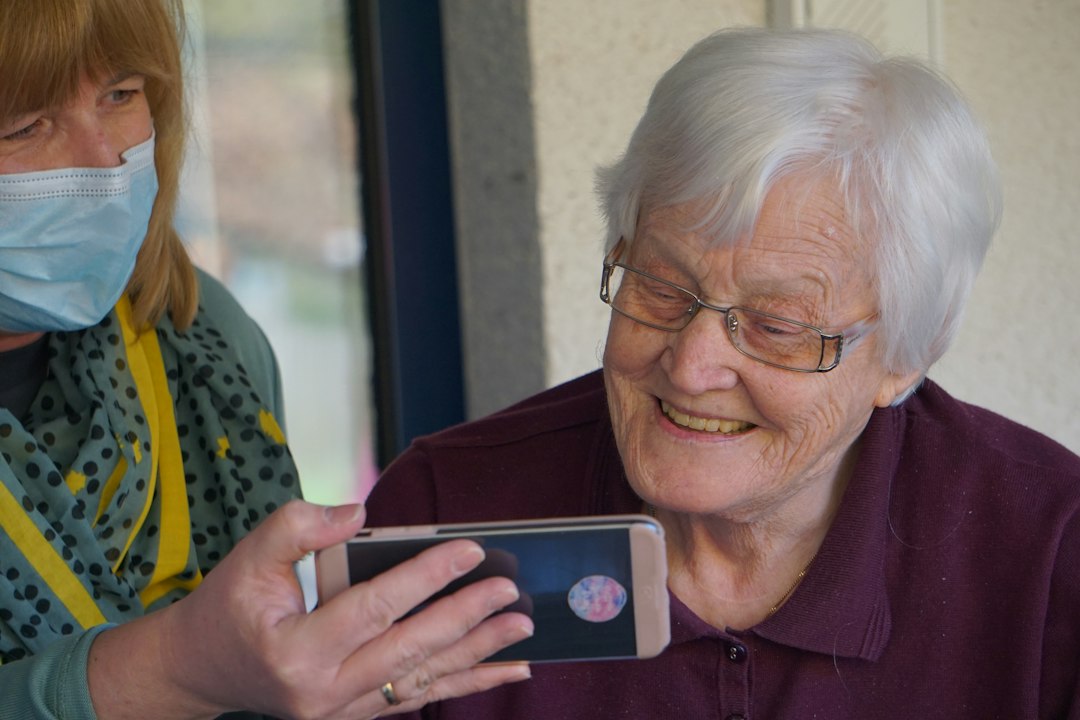
AI Communication Tools for Senior Care Providers in Atlanta
Share this post
AI is changing how senior care providers in Atlanta coordinate care. See how smarter communication reduces gaps, delays, and costly errors across your faci...
Not long ago, coordinating care for a senior patient across multiple providers meant phone tag, faxed documents, and hoping the right person got the message in time. Today, AI-powered communication tools are changing what's possible — and facilities across Metro Atlanta are starting to pay attention.
For senior care, the stakes are high. A missed medication update, a delayed lab result, or a breakdown between a home care agency and a referring physician can directly affect patient outcomes. AI doesn't eliminate human judgment, but it does reduce the gaps where critical information falls through.
If you manage a senior care facility, home care agency, or outpatient clinic serving older adults in the Atlanta area, here's what you need to know about AI communication tools and how they fit into a care model that actually works.
Why Communication Breaks Down in Senior Care Settings
Senior care involves more moving parts than almost any other care setting. You're often coordinating between primary care physicians, specialists, pharmacists, home health aides, and family members — sometimes across multiple counties.
In Gwinnett County and Fulton County alone, the number of senior care facilities, assisted living communities, and home care agencies has grown considerably. More providers means more handoffs. More handoffs means more chances for a message to get lost or a decision to be delayed.
The traditional model relies heavily on individual staff members to track and relay information. When someone is out sick, overwhelmed, or working a double shift, things slip. AI tools are designed to reduce that dependency on any single person carrying critical information in their head.
What AI Communication Tools Actually Do
The term "AI" gets thrown around loosely, so let's be direct about what these tools do in a senior care context. Most fall into a few practical categories: automated care alerts, natural language documentation, predictive flagging, and cross-platform messaging.
Automated care alerts notify the right team member when a patient's condition changes — a shift in vitals, a missed medication, or an updated care plan from a specialist. These alerts don't replace clinical judgment. They make sure the right person sees the right information without someone having to manually track it.
Natural language documentation tools help nurses and aides capture notes faster and more completely. When documentation improves, care transitions improve. When a patient is transferred from a facility in Sandy Springs to a home care agency in Decatur, the receiving team has what they need.
Predictive flagging is newer but powerful. Some systems can identify patients at higher risk for a fall, a hospitalization, or a medication error — giving your team a window to intervene before a crisis develops. Senior care facilities in Alpharetta and Suwanee that have adopted these tools report that their care teams feel less reactive and more in control.
New to ICR? Senior care facilities, pharmacies, labs, clinics, specialty practices, and surgical centers across Metro Atlanta can get set up and try ICR free for 30 days — you only pay for the deliveries you book. Get set up in minutes.
HIPAA Still Applies — and AI Doesn't Change That
One concern that comes up immediately when senior care administrators start exploring AI tools is HIPAA. It's a fair concern. Any platform that handles patient data needs to meet HIPAA requirements. Full stop.
When evaluating AI communication platforms, your first questions should be about data storage, access controls, and Business Associate Agreements. If a vendor can't clearly answer those questions, that's your answer.
The same logic applies to every part of your care workflow — including how lab specimens and medical records are transported. If your team is using rideshare drivers or informal couriers to move sensitive materials between facilities in DeKalb County or Lawrenceville, that's a HIPAA exposure point that no amount of AI investment can fix. You can read more about that specific risk in our post on dedicated medical couriers vs. rideshare for specimen transport in Atlanta.
Connecting AI Communication to Physical Care Coordination
Here's where a lot of facilities miss the bigger picture. AI can dramatically improve how information moves between people. But information still has to connect to physical action — and that's where gaps often remain.
A senior patient in Norcross gets flagged by your AI system as showing early signs of a UTI. A lab order goes out. Now what? If your lab pickup isn't reliable, if the specimen sits at a nursing station for two hours, or if results come back after the window to act has passed — the AI alert didn't save anyone anything.
Senior care providers who want AI communication tools to actually improve outcomes need the physical logistics chain to match. That means a same-day medical courier in Atlanta that operates on a defined schedule, confirms pickup and delivery, and maintains chain of custody for every specimen.
Senior care facilities, independent labs, and home care agencies across Metro Atlanta can get set up with ICR and try account access free for the first 30 days — you only pay per delivery you book at standard rates. It's a low-barrier way to see if dedicated courier service fits your workflow before you fully commit.
What Senior Care Providers in Metro Atlanta Should Look For
If you're evaluating AI communication platforms for your facility in Duluth, Sandy Springs, or anywhere across the Atlanta metro, a few priorities should guide your decision.
- Integration with your existing EHR — a platform that doesn't connect to your current system adds work instead of reducing it.
- Staff adoption rate — the best AI tool fails if your team won't use it. Look for platforms designed for clinical staff, not just administrators.
- Audit trails — every communication related to patient care should be logged. This matters for compliance and for resolving disputes when something goes wrong.
- Scalability — if you manage multiple locations across Gwinnett County or Fulton County, your platform needs to scale with you.
For a deeper look at what senior care providers prioritize when building their care networks, including lab partnerships, check out our post on what senior care providers look for in lab partners in Atlanta.
The Real Competitive Advantage in Senior Care Right Now
Senior care facilities that are pulling ahead right now aren't just the ones with the newest technology. They're the ones that have closed the gap between digital communication and physical execution.
AI tells your team what needs to happen. Your logistics infrastructure determines whether it actually happens. When both sides are working, the results show up in fewer rehospitalizations, faster treatment decisions, and care teams that spend more time with patients and less time chasing down information.
If you're a home care agency owner in Lawrenceville, a director of nursing in Decatur, or a clinic administrator in Alpharetta, the question isn't whether AI will matter for senior care communication. It already does. The question is whether your full workflow — digital and physical — is built to support it.
Start with what you can control today. Evaluate your communication gaps. Audit your specimen transport process. And make sure the physical side of your care chain is as dependable as the technology you're investing in.
Ready for Reliable Same-Day Medical Courier Service in Atlanta?
ICR serves independent labs, clinics, urgent care centers, home care agencies, and physician offices across Metro Atlanta — Gwinnett, Fulton, DeKalb, and Cobb County.
Click Here To Get Instant Courier RatesShare this post
Subscribe to ICR Newsletter
Specimen logistics, laboratory operations, and Metro Atlanta healthcare delivery insights — free.
Unsubscribe anytime. We respect your inbox.
Need a recurring specimen route or backup courier coverage?
Instant Courier Rates supports independent labs and specialty practices with scheduled specimen routes, STAT pickups, backup courier coverage, and same-day medical delivery across Metro Atlanta. Get an instant quote →
Top Posts

Dedicated Medical Courier vs. Rideshare for Specimen Transport
10/13/2026

Atlanta Traffic and STAT Medical Delivery Times for Seniors
10/08/2026
The Case for Dedicated Medical Couriers in Atlanta
10/07/2026

Medical Courier Service in Lawrenceville, GA
10/06/2026
What Senior Care Providers Look For In Lab Partners
10/01/2026